An AI-augmented quoting & margin-review system — designed, directed, and verified end-to-end.
A system I designed and operate for a facilities-maintenance business: field teams need fast, consistent, defensible quotes for maintenance work orders; managers need a margin-and-risk gate; the business needs an audit trail. Here's how it's built — and the calls I made.
Everything shown uses fully synthetic, debranded data — the operating client is confidential. The company on screen, “Northwind Facilities Services,” is a stand-in, and all pricing and figures are illustrative. No real client, pricing, or private information appears anywhere on this page.
Quoting maintenance work by hand is slow and inconsistent — the same job can be priced three different ways depending on who picks up the phone. Margins erode quietly, risky jobs get approved without a second look, and when a number is questioned later, there's no record of how it was reached. The system replaces that with a consistent intake, a pricing model anyone can audit, a risk gate that can't be skipped, and a trail that survives the handoff to billing.
How the system works — and why it's built this way.
End-to-end quoting and margin-review for facilities work orders. I designed the whole flow: intake → priced quote → risk-gated human review → audit trail.
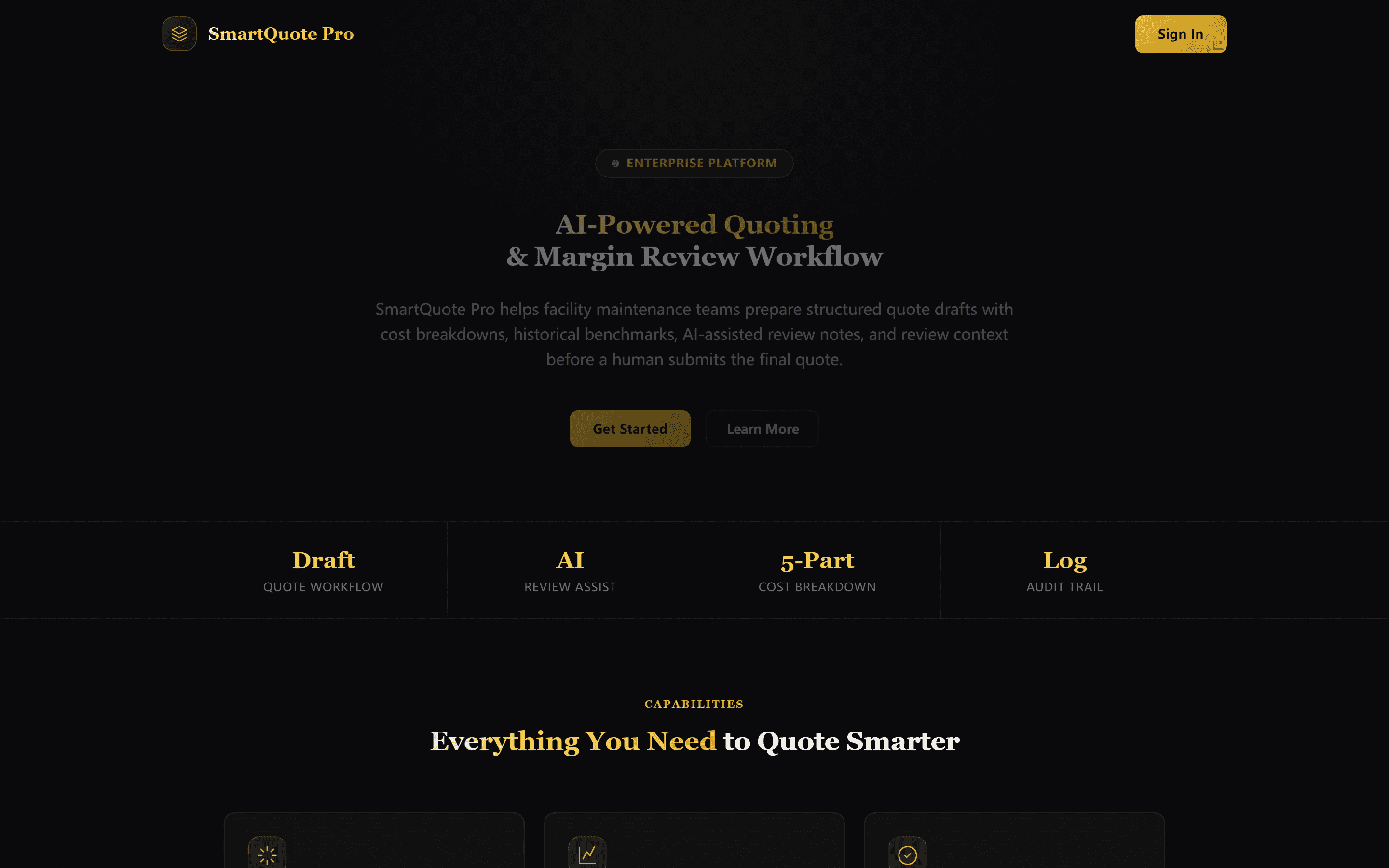
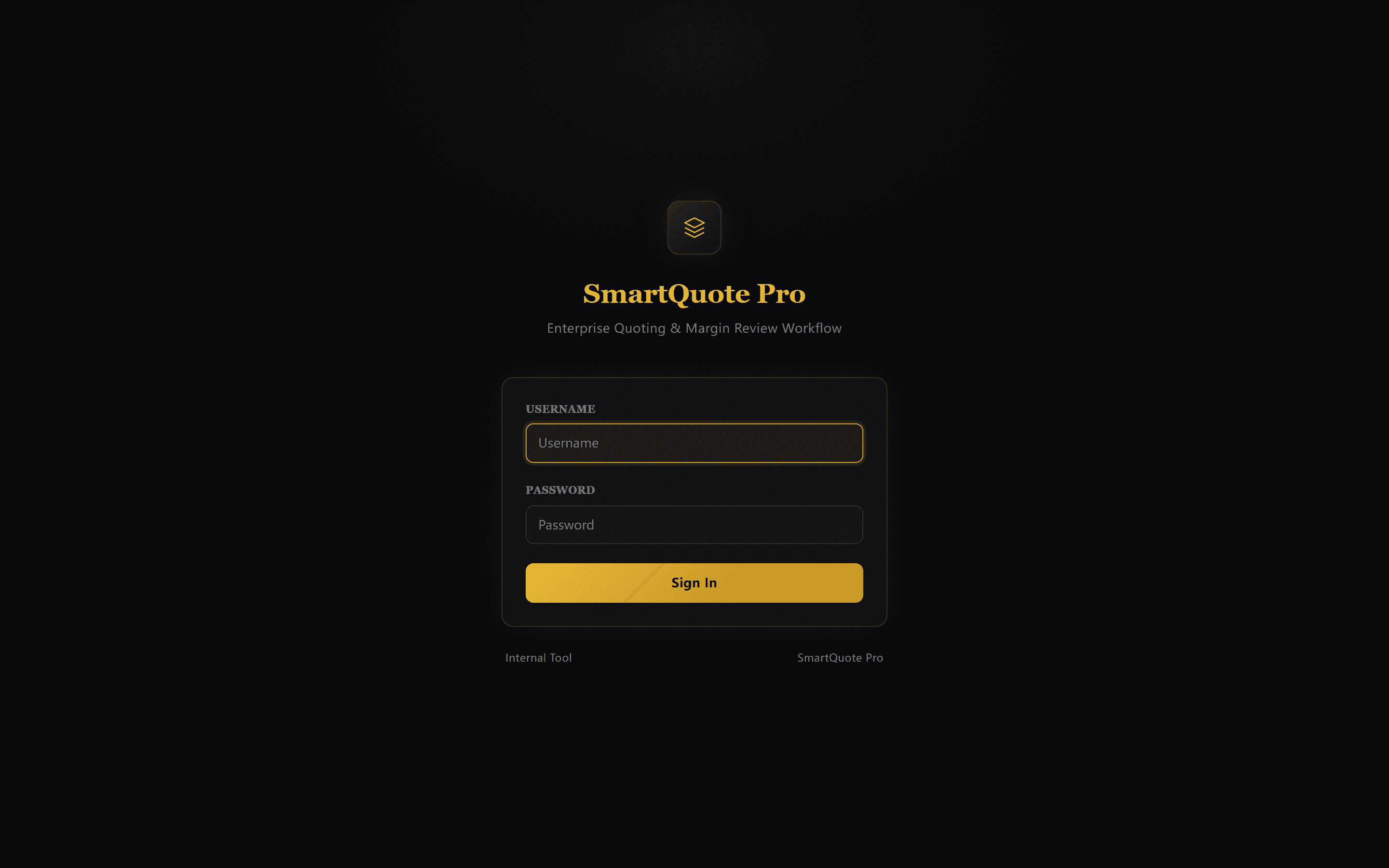
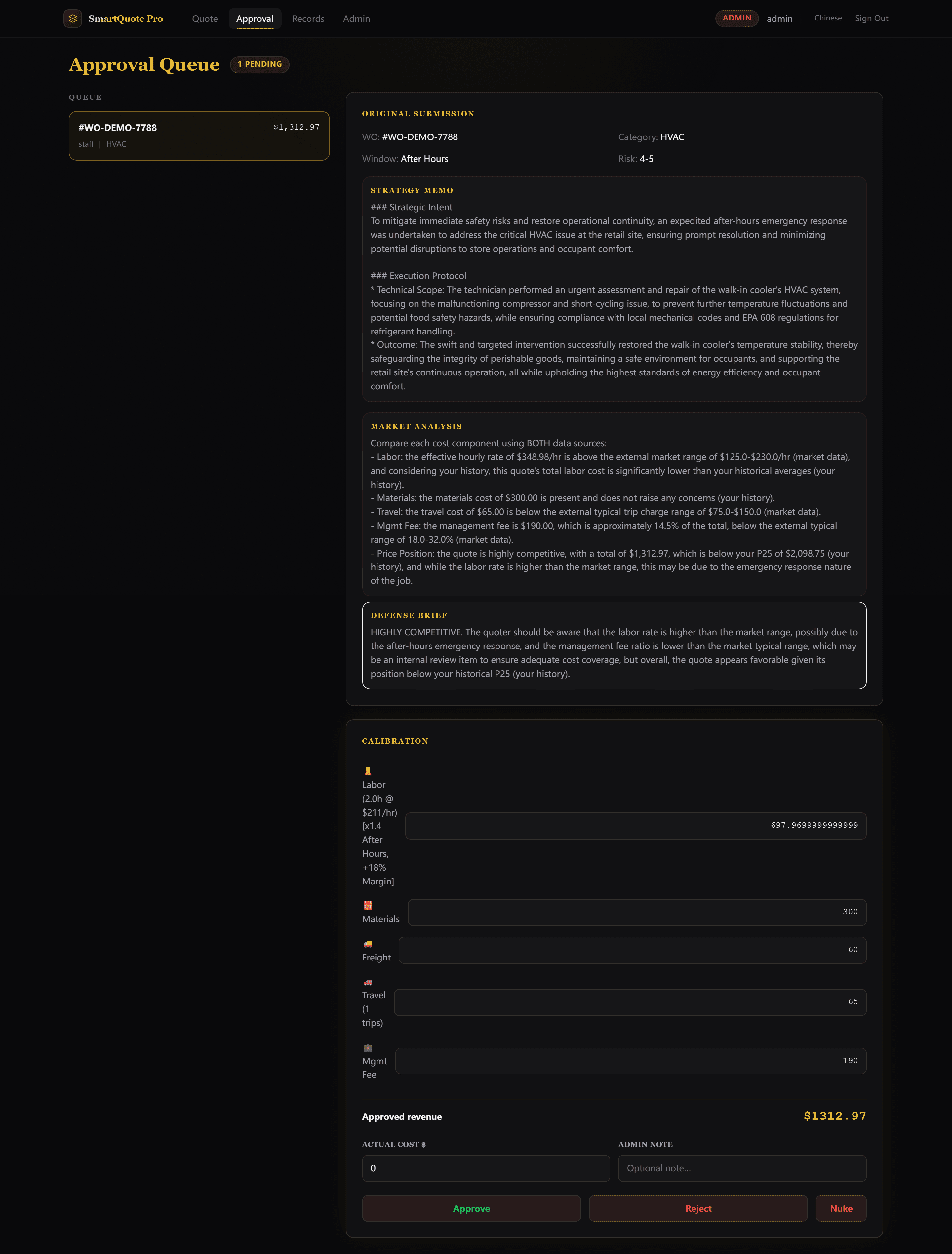
Three roles (staff / manager / admin), enforced server-side. A staff user can create quotes but cannot approve them — the navigation itself reflects the access model I designed.

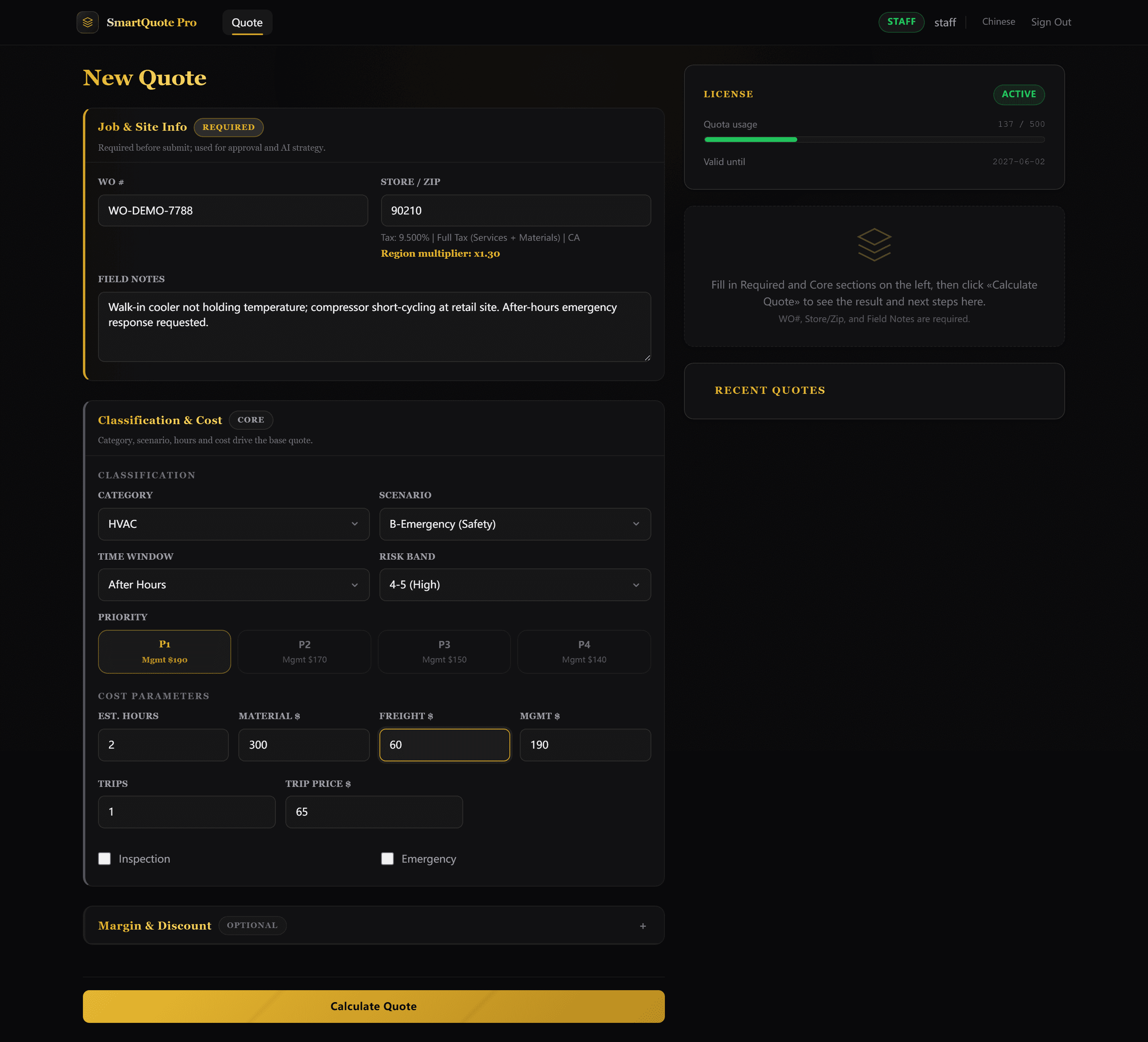
Every quote captures the variables that actually move price — trade, urgency, risk, and regional factors — so pricing is consistent and defensible, never ad-hoc.
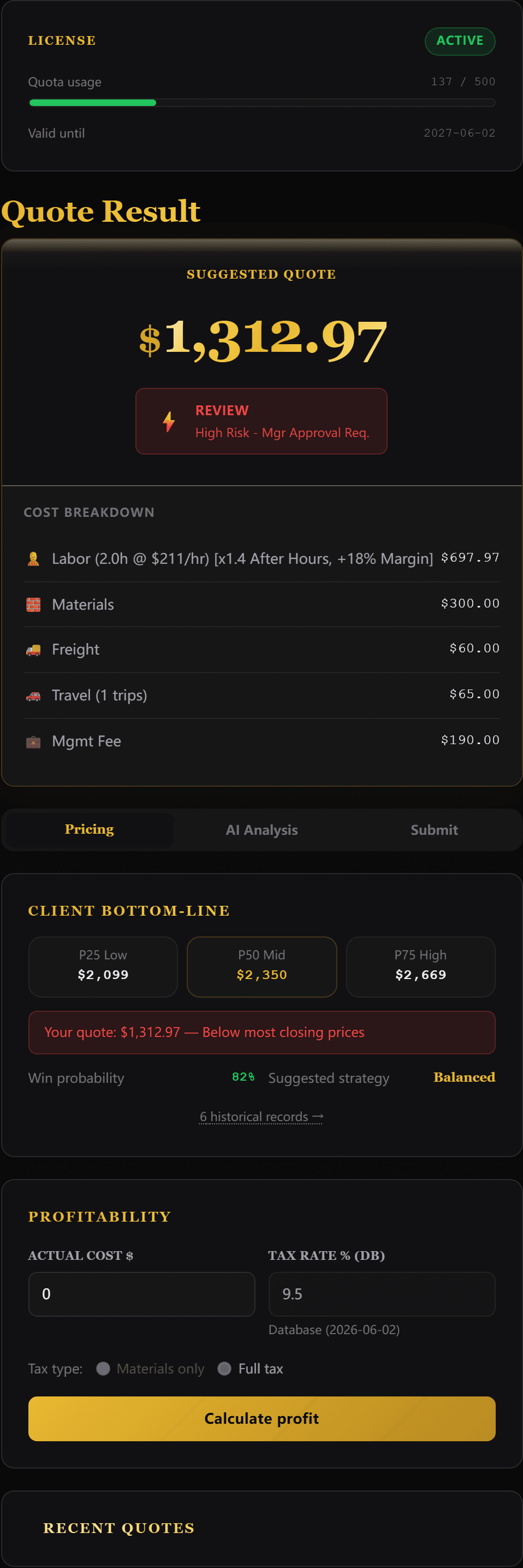
A multi-part cost breakdown (no black box), and high-risk jobs automatically trip a manager-approval gate. The control is built into the pricing logic — not a rule someone has to remember to follow.
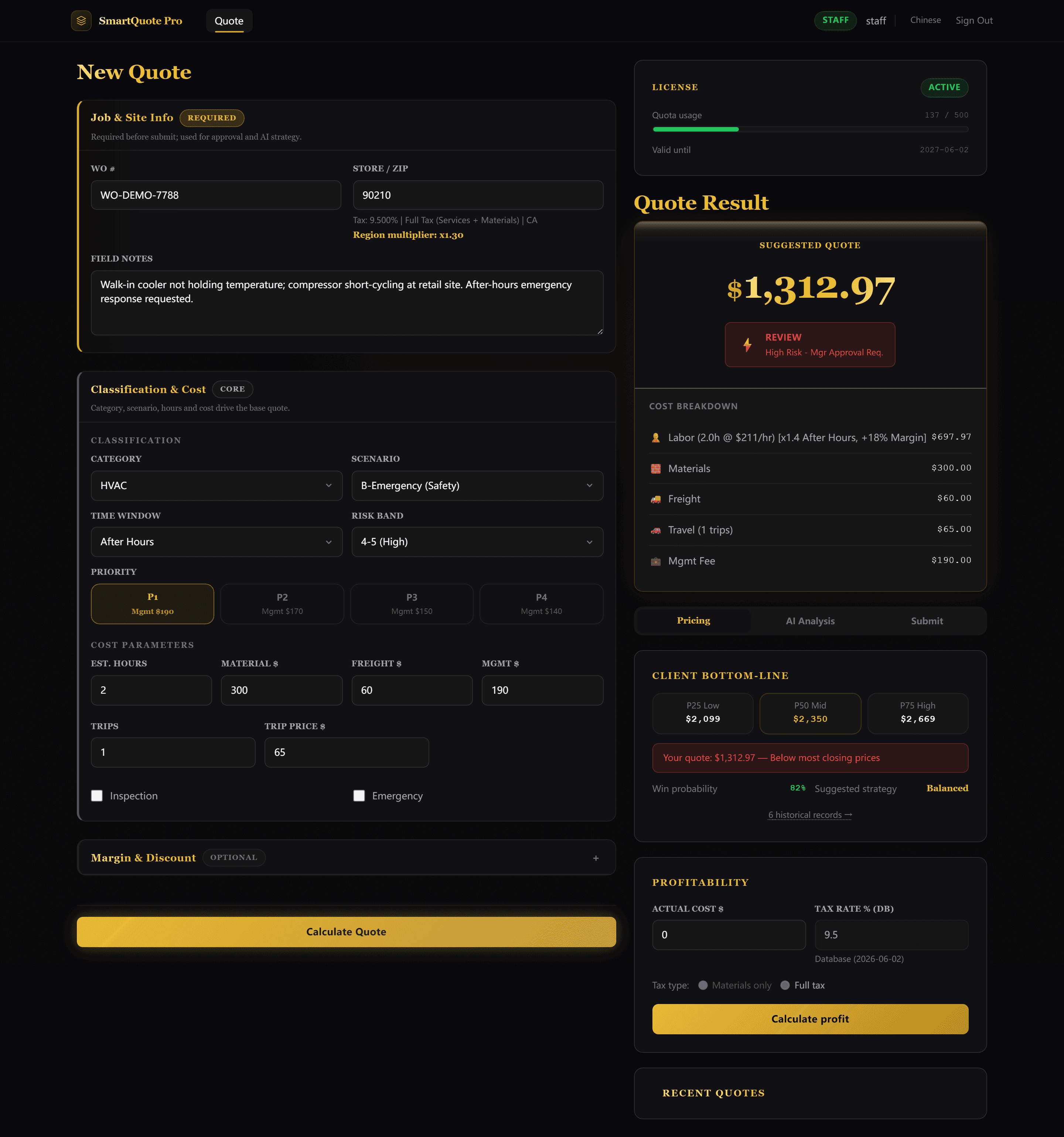
Each quote is scored against the company's own closing history — percentile positioning plus a win-rate signal. A quote below market gets flagged as competitive. The system learns from outcomes.
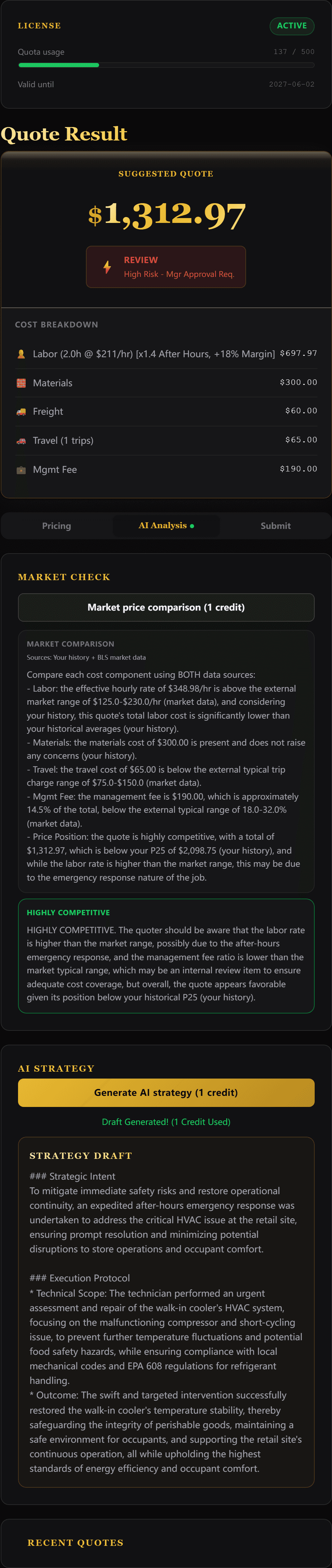
An LLM drafts the strategy memo and a live market comparison to speed the estimator up. It never auto-approves. I designed the boundary deliberately: AI assists, the human owns the decision.
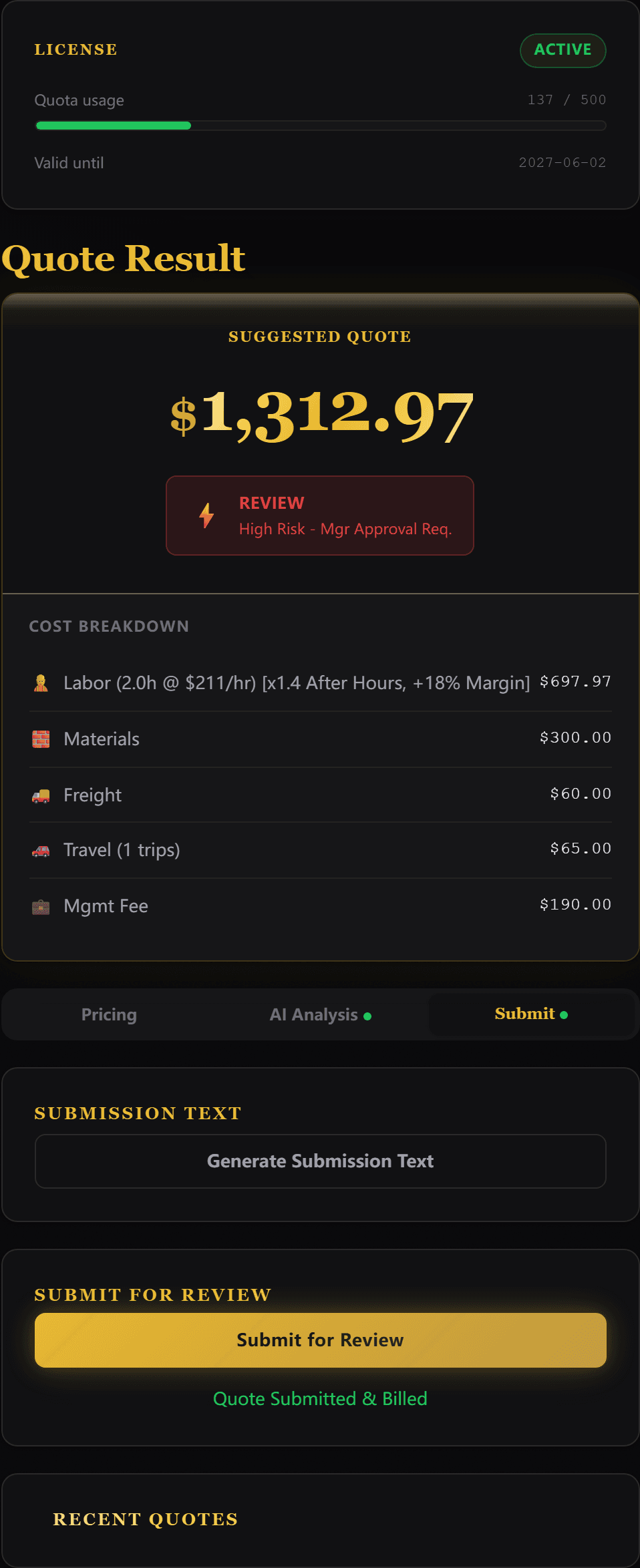
Submit is transactional— quote and billing commit together. The full submission, AI memo, and market analysis all carry into the manager's review queue; nothing is lost between steps.
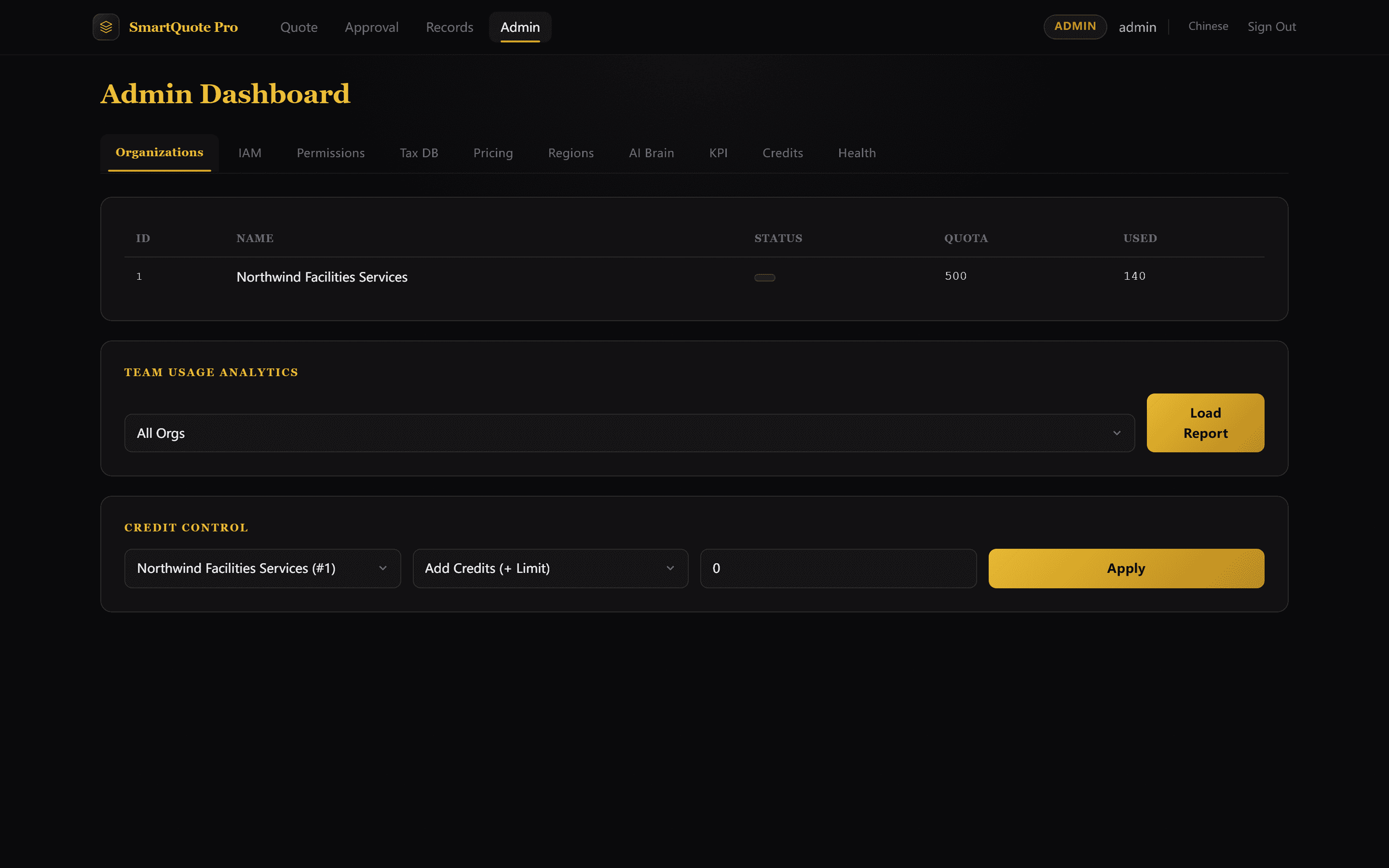
Admin governs orgs, IAM, pricing rules, the tax database, the AI configuration, credits, and system health — the operational surface I designed so the business runs without me babysitting it.
The four calls that define the system.
Controls by construction
The risk-approval gate lives inside the pricing logic, not on a checklist. A high-risk job can't slip past review because the system — not a person's memory — enforces it.
Role-scoped access, server-side
Staff / manager / admin permissions are enforced on the server, and the UI reflects them. The person who writes a quote is structurally separated from the person who approves its margin.
AI drafts, the human decides
The LLM accelerates the estimator with a strategy memo and market read, but it never auto-approves. I drew that boundary on purpose — speed without surrendering the decision.
Learning from outcomes
Every quote is benchmarked against the company's own closing history, so pricing gets sharper as more jobs close — a flywheel, not a static rule table.
- 01Designed the end-to-end flow, the pricing-and-risk logic, and the three-role access model.
- 02Directed the AI implementation — specifying the boundaries, reviewing what it produced, and deciding what shipped.
- 03Verified it end-to-end — exercising the real paths and catching the failure modes before they reached the operator.
This is how I work: design the system, direct the build, own the verification.
If you're evaluating someone to design or operate AI-augmented systems, this is a representative piece of how I think. There's more in the collection.